An electrophysiology (EP) study is a detailed analysis of the electrical activity in your heart. It’s a subject within cardiology that aims to diagnose and treat abnormal heart rhythms (arrhythmias). Here’s how it works:
- Procedure: During an EP study, healthcare providers use catheters (small tubes) that go into your heart to capture its signals. These catheters provide more information than electrodes placed outside your chest.
- Analysis: Electrophysiologists, who are experts in heart rhythms, analyze data from an electrocardiogram (EKG). Each wave on the EKG screen reveals what different parts of your heart are doing. They pay close attention to where an abnormal rhythm starts and ends. Then, they test theories in the EP lab using equipment and medicines to manipulate your heart rate.
- Purpose: The EP study helps determine why your heart rhythm is abnormal. It’s like figuring out why a bus isn’t following its usual route. Irregular signals can be like that misbehaving bus. Providers want to know if the rhythm is dangerous and how to treat it.
- Results: The study provides information about your abnormal heart rhythm, such as its origin and cause. Based on this, your electrophysiologist can develop the best treatment plan for you.
Usually the treatment (radiofrequency ablation/RFA) for abnormal fast rhythms is done simultaneously or just after electrophysiological study.
EP catheters placed in the heart
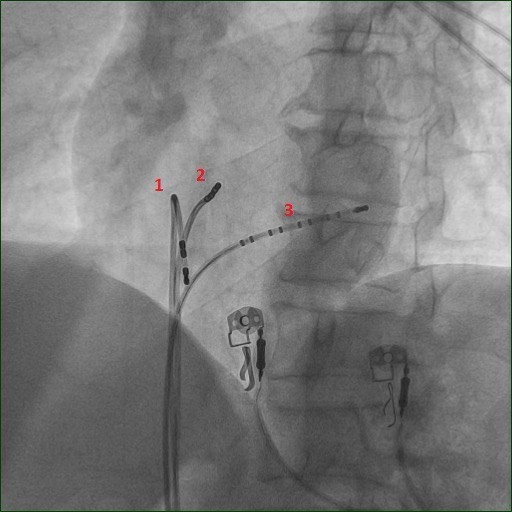
Image: EP catheters placed in the various chambers of the heart. 1. Quadripolar catheter in RV, 2. Quadripolar catheter at His bundle location, 3. Decapolar catheter in coronary sinus
How long does an EP study take?
The duration of an Electrophysiology (EP) study can vary, but typically it takes 1 to 4 hours. Here’s a breakdown:
- Preparation: Before the procedure, you’ll be prepared by the medical team. This includes cleaning the area where the catheters will be inserted and administering local anesthesia.
- Catheter Placement: During the study, thin catheters are threaded through blood vessels to your heart. These catheters record electrical signals and stimulate the heart to provoke arrhythmias.
- Data Collection: The electrophysiologist analyzes the electrical activity of your heart. They may induce abnormal rhythms to understand their origin and behavior.
- Treatment Decision: Based on the findings, the doctor determines the best course of action. Sometimes, they may proceed with additional treatments like ablation (destroying abnormal tissue) during the same session.
- Recovery: After the study, you’ll need to rest for a few hours. You might stay overnight for observation, especially if other procedures were performed.
Remember, each person’s situation is unique, so the exact duration can vary. Your electrophysiologist will provide specific details based on your case.
How do I prepare for an EP study?
To prepare for an Electrophysiology (EP) study, follow these steps:
- Fasting: Do not eat or drink anything for 6 to 8 hours before the test. This ensures accurate results during the procedure.
- Medication Review: Inform your healthcare team about all medications you take, including over-the-counter medicines, herbs, and vitamins. They may advise you to temporarily stop certain medications (such as beta blockers, calcium channel blockers, Amiodarone) before the test.
- Transportation Arrangements: Arrange for someone to drive you to your appointment and take you home afterward. You might feel a bit groggy after the study.
Remember, these preparations are essential for a successful EP study.
Is the procedure painful?
During an Electrophysiology (EP) study, you’ll likely experience minimal discomfort rather than intense pain. Let me break it down for you:
- Local Anesthesia: Before the procedure, the medical team will administer local anesthesia to numb the area where the catheters are inserted. You might feel a pinch during this step.
- Catheter Insertion: The insertion of catheters through blood vessels can cause a slight pressure sensation. However, most people tolerate it well.
- Stimulation and Induction: The electrophysiologist may intentionally provoke abnormal heart rhythms to study them. You might feel your heart racing or fluttering, but it’s usually not painful.
- Observation: Throughout the study, you’ll be closely monitored. If you experience any discomfort, the team can adjust medications or address it promptly.
- Afterward: After the study, you might feel tired or groggy, but this is temporary.
Remember, your comfort is a priority, and the medical team will ensure you’re as comfortable as possible during the procedure.
What are the risks of an EP study?
An Electrophysiology (EP) study is a series of tests that examine the heart’s electrical activity. While it provides valuable information, like any medical procedure, it comes with certain risks. Here are the possible risks associated with an EP study:
- Bleeding or Infection: There’s a risk of bleeding or infection at the site where the catheters are inserted. The delicate blood vessels and heart tissue can be affected.
- Damage to Heart Valves or Blood Vessels: During the procedure, there’s a possibility of damaging heart valves or blood vessels. Careful navigation is crucial to avoid such complications.
- Heart’s Electrical System Damage: Rarely, the heart’s electrical system may be harmed during the study. If this occurs, it might necessitate the placement of a pacemaker to correct the issue.
- Blood Clots: Formation of blood clots can occur at the catheter insertion site. These clots may break off and travel to other blood vessels.
Remember, while these risks exist, they are carefully managed by skilled medical professionals. The benefits of diagnosing and treating abnormal heart rhythms often outweigh the risks. Always discuss any concerns with your healthcare provider before undergoing the procedure.
How long does it take to recover from EPS?
The recovery time after an Electrophysiology (EP) study can vary based on individual factors and the specific details of the procedure. Here are some general guidelines:
- Immediate Recovery: After the EP study, you’ll spend a few hours in a recovery area. During this time, medical staff will monitor your vital signs and ensure you’re stable.
- Rest and Observation: You might feel tired or groggy due to the anesthesia or sedation. Rest and observation are essential during this initial recovery period.
- Discharge: Most patients can go home on the same day. However, if additional procedures (such as ablation) were performed during the EP study, you might need to stay overnight for further observation.
- Activity Restrictions: Follow your doctor’s instructions regarding activity limitations. Avoid strenuous activities for a few days.
- Incision Site Care: Take care of the catheter insertion sites. Keep them clean and dry as instructed.
- Medications: Continue any prescribed medications as directed by your healthcare provider.
 Dr. Nitin Parashar