An electrocardiogram (ECG or EKG) is a common and painless test used to record the electrical signals in the heart. It provides valuable information about the heart’s health and helps diagnose various heart problems. Here are the key points about ECG:
- Purpose:
- Detect irregular heart rhythms (arrhythmias).
- Assess whether blocked or narrowed arteries in the heart (coronary artery disease) are causing chest pain or a heart attack.
- Evaluate the effectiveness of heart disease treatments (such as pacemakers).
- Monitor heart health in individuals with diagnosed heart conditions.
- Screen individuals with a family history of heart disease, even if they have no symptoms.
- Procedure:
- ECGs are often performed in health care provider’s offices, clinics, or hospital rooms.
- Electrodes (small metal disks with wires) are placed on the chest while you lie on an exam table.
- A lubricating gel is applied to help sound waves pass through the skin.
- The electrical activity of the heart is recorded as waves on a graph, representing different phases of the heartbeat.
- Types of ECG Monitoring:
- Holter Monitor: A wearable device that continuously records ECG for 24 to 48 hours.
- Event Monitor: Similar to a Holter monitor but records only at specific times for a few minutes. It can be worn for up to 30 days.
- Some personal devices, like smartwatches, also offer ECG monitoring.
- Results:
- A consistent heart rhythm with a rate between 60 and 100 beats per minute is normal.
- Irregular rhythms or abnormal patterns may indicate underlying conditions.
- ECGs help detect structural abnormalities, inadequate blood flow to the heart, heart attacks, and damage to the heart muscle.
- Safety and Preparation:
- ECGs are safe and non-invasive; electrodes do not produce electricity.
- Minor discomfort may occur when removing the electrodes.
- No special preparation is needed for a standard ECG; inform your provider about medications and supplements.
Remember, an ECG is a valuable tool for assessing heart health and diagnosing heart-related issues.
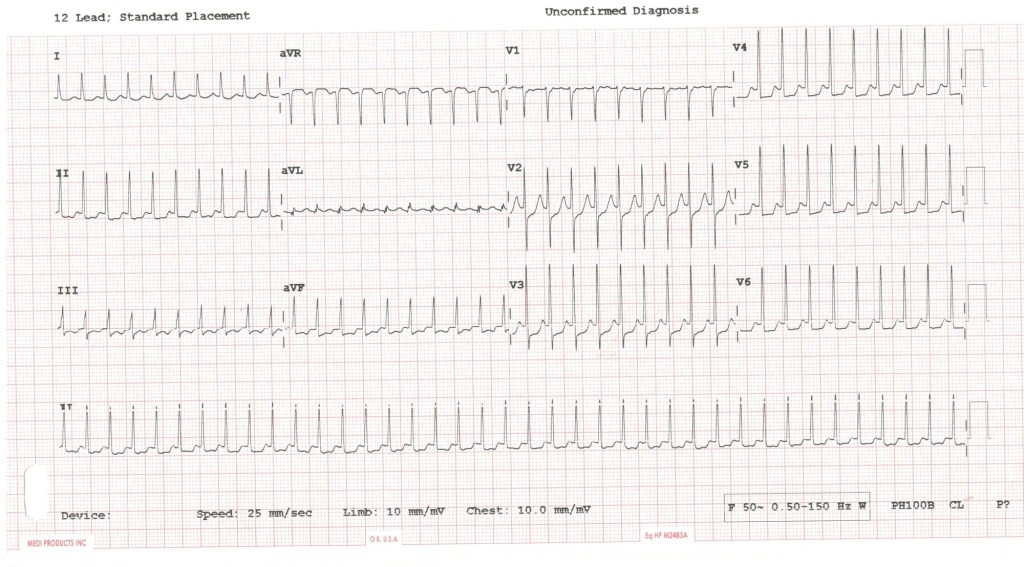
Image- ECG of a patient who presented with palpitations. ECG helped in diagnosing the condition as PSVT (AVNRT).
How long does an ECG take to complete?
The duration of an electrocardiogram (ECG) can vary, but typically, the procedure takes about 2 to 5 minutes to complete. During this time:
- You’ll be asked to lie down on an exam table.
- Electrodes (small metal disks with wires) will be attached to your chest, arms, and legs.
- The ECG machine will record the electrical signals from your heart as waves on a graph.
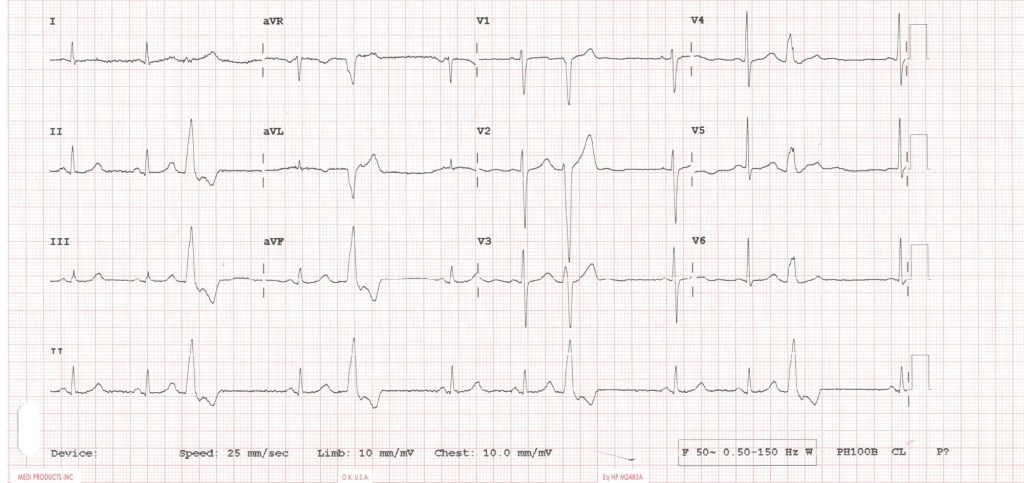
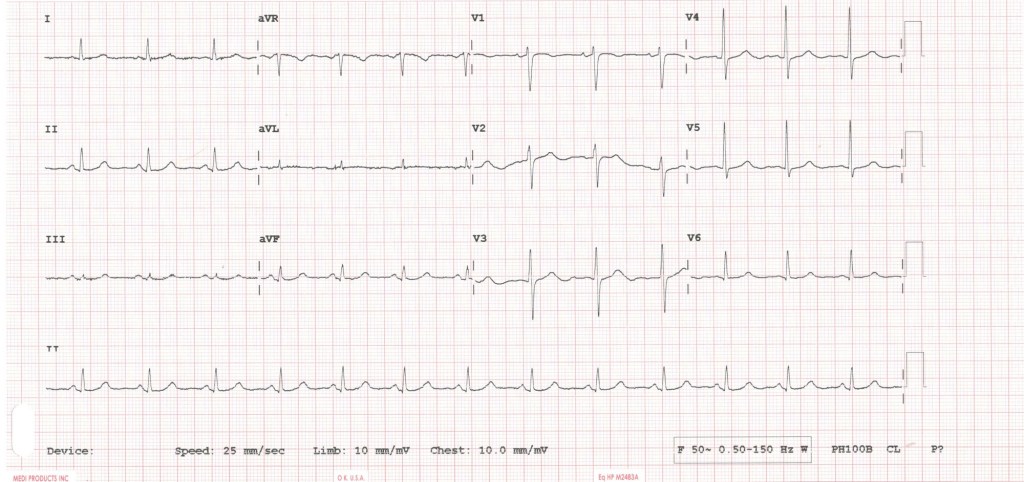
Image- Preprocedure ECG of a patient with ventricular bigeminy. PVCs disappeared after radiofrequency ablation (RFA).
Are there any risks associated with ECG?
Electrocardiograms (ECGs or EKGs) are generally safe and noninvasive tests. Here are some important points regarding risks:
- Minimal Risks:
- ECGs do not involve electric shocks or invasive procedures.
- Most people experience no discomfort during the test.
- However, some individuals may develop a skin rash where the electrodes were placed. This rash usually resolves without treatment.
- Discomfort During Electrode Removal:
- After the ECG, when the sticky electrodes are taken off, you might feel minor discomfort.
- Leaving the electrode patches on for an extended period could cause skin irritation.
Remember that ECGs play a crucial role in assessing heart health, and any potential risks are minimal compared to the valuable information they provide. If you have concerns, discuss them with your health care provider.
 Dr. Nitin Parashar